US Open: Back Medvedev at 12/1 for US Open reminder
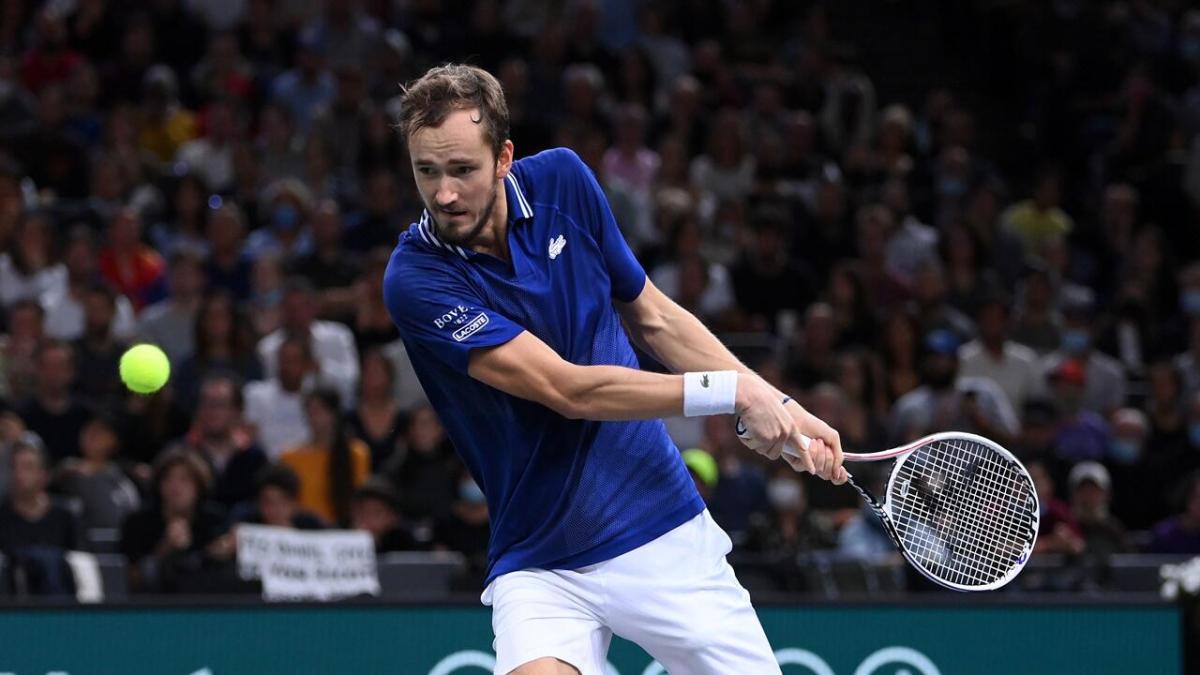
It's easy to focus on grand narratives and recent events, writes Jack Houghton, who thinks Djokovic and Alcaraz are poor value...
-
Djokovic (2.3411/8) and Alcaraz (3.052/1) head the market
-
Their rivals represent better value
-
Medvedev (13.012/1) is a previous champion and can repeat
Separating winners and losers
Crudely dividing punters into two groups - profitable and unprofitable - and searching for what separated those two groups, you would be forgiven for thinking it was sporting knowledge or betting expertise that made the difference.
In my experience, though, unprofitable punters often know more about the sports they bet on than their profitable counterparts, and have a wealth of technical betting expertise on which to draw.
The difference, then, tends to be one of temperament. Unprofitable punters are generally inept when it comes to restricting the irrational influences that battle for control of our decision making.
For most unprofitable punters, if they simply bet less, on a narrower range of markets, and were aware of some of the cognitive biases that can easily cloud our thinking, their fortunes would immediately turn.
Cognitive biases and the US Open
This year's US Open market provides a case study for two particular cognitive biases that can muddy our decision making: recency bias and narrative bias.
A preview of the US Open isn't the place to go into a detailed exploration of these cognitive biases, except to say that psychologists have demonstrated a tendency for humans to want to explain complex situations by replacing them with simple narratives, and that humans also overvalue and overemphasise the latest information at the expense of things they have known for longer.
The story going into the tournament
And this is a problem when it comes to this US Open. Here's the grand narrative...
Novak Djokovic was the dominant, but ageing force in men's tennis. A young, talented, pretender in the shape of Carlos Alcaraz has come to take his crown. The Wimbledon final this year was the tipping point. Djokovic will battle on for a few tournaments, but Alcaraz will soon establish himself as the new dominant force.
It's a lovely story. Easy to understand and remember. And when Djokovic and Alcaraz contested the final in Cincinnati - the most recent information we have - the narrative embedded itself more strongly.
One US Open preview I read even began with the line, "Two players stand head and shoulders..." No prizes for guessing who those players were.
The problem with the narrative - like most - is that it ignores the more complex and nuanced reality.
Although Alcaraz has become more consistent in the last two seasons - evidenced by his US Open and Wimbledon wins - his rise has not been dramatic. Using my Elo ratings to price up a match between Alcaraz now and Alcaraz in 2021, I would only make the present-day version the 1.68/13 favourite.
As I've written about before, the shifting hierarchy at the top of the men's game in recent years has much less to do with younger players getting better, and much more to do with the disappearance of a dominant class in the shape of Federer, Nadal and Djokovic, who were historically "head and shoulders" above any cohort of players before or since.
To illustrate this, it's worth noting that, on my Elo ratings, Djokovic in 2018 would be a 1.162/13 shot if taking on Alcaraz now.
The real narrative of men's tennis, then, that is more complex and less pleasing than the "passing of the crown" one favoured by most commentators, is as follows.
Alcaraz has improved a bit in the last two seasons and is now, just about, the best player in the world. Djokovic is not as good a player as he was, but given the less-competitive landscape he faces, he is still good enough - and, crucially, experienced enough - to win any tournament he enters. Close behind Alcaraz and Djokovic are a group of players who have all demonstrated the ability to win Majors over the last few seasons, but who have perhaps slipped from our memories somewhat because it's been a few months since they impressed.
The impact of these narrative and recency biases can be seen in the market, where Alcaraz (3.052/1) and Djokovic (2.3411/8) are both overvalued.
Below, the current market odds are given first, followed by the odds churned out using my Elo ratings and tournament simulation:
Novak Djokovic (2.3411/8) (2.466/4)
Carlos Alcaraz (3.052/1) (3.929/10)
Daniil Medvedev (13.012/1) (8.27/1)
Jannik Sinner (19.018/1) (14.3133/10)
Stefanos Tsitsipas (55.054/1) (46.045/1)
Alexander Zverev (50.049/1) (200.0199/1)
Holger Rune (65.064/1) (34.033/1)
Taylor Fritz (90.089/1) (48.047/1)
Casper Ruud (100.099/1) (300.0299/1)
Despite his ratings' supremacy over Djokovic, the draw has been unkind to Alcaraz, explaining why the market - and my simulation - slightly favours Djokovic. Of more note, though, is that the pair are both shorter than they should be in the betting, meaning that most of their near rivals represent value.
One approach to profiting from this US Open would be to lay both Alcaraz and Djokovic, but I prefer backing Daniil Medvedev.
It's easy to forget (recency bias again) that he has an 84% strike rate on hard courts this year, where he has won three titles, and, of course, that he was the champion here in 2021, something Djokovic hasn't managed since 2018.
Recommended bets
GET £50 IN FREE BETS MULTIPLES WHEN YOU SPEND £10 ON THE BETFAIR SPORTSBOOK
New customers only. Bet £10 on the Betfair Sportsbook at odds of min EVS (2.0) and receive £50 in FREE Bet Builders, Accumulators or Multiples to use on any sport. T&Cs apply.
Prices quoted in copy are correct at time of publication but liable to change.