Surrender in Blackjack: When and How to Use It
Discover everything you need to know about surrender in online blackjack, including what it is and when and how to use it to enhance your gameplay experience...
- Blackjack offers a variety of gameplay actions
- Hitting, standing, doubling down are standard but surrender can be useful
- Use Blackjack surrender to reduce losses and lower the house edge
What is Surrender in Blackjack?
Blackjack surrender lets you forfeit your hand in exchange for half of your bet. Used correctly, it can minimise potential losses in unfavourable conditions.
The idea of the surrender blackjack option is fairly straightforward; rather than play out a hand that is likely to lose, you can cut your losses by surrendering and getting half your bet back.
Types of Blackjack Surrender Online
There are generally two types of surrender in blackjack:
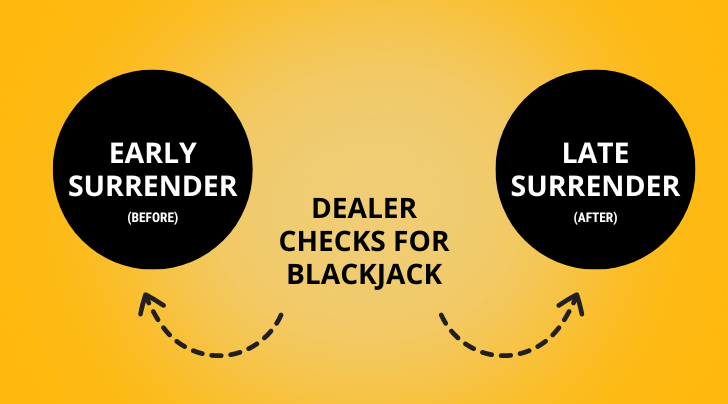
- Early Surrender - This option lets you surrender your hand before the dealer checks for a blackjack. As such, this option is only relevant when the dealer's up card has a value of 10. This option is less common and more advantageous as you can use it against a potentially stronger hand.
- Late Surrender - This option is more common and only becomes available after the dealer has checked for a blackjack if there's a suitable upcard. If the dealer happens to have a blackjack, surrender is not an option.
When to Surrender in Blackjack
Understanding when to use surrender in blackjack is crucial to potentially lowering your losses in the long run. Here are some examples of when it makes sense to surrender rather than continue to play your hand.
- Against a Dealer's Ace - If you have a hard 15 or 16 and the dealer shows an A, using the blackjack surrender strategy may be the right choice. The dealer's strong potential for a blackjack or a high total makes your chances of winning relatively slim.
- Against a Dealer's 10 - If you hold a hard 16, surrendering against a dealer's 10 upcard can also be suitable. Except for holding a pair of 8s, any other combination would likely lose since the dealer has a mathematical likelihood of getting a higher-value hand.
- Against a Dealer's 9 - Similarly to the previous case, if the dealer's up card is a 9 and you are holding a hard 16, it would still be a good idea to use the blackjack strategy to surrender. Once again, the dealer has a high mathematical likelihood of getting a stronger hand.
These examples illustrate some of the most common situations where using this forfeit option makes sense. However, every game can vary slightly based on specific surrender blackjack rules and the number of decks used.
Blackjack Surrender Decision Example
Let's consider that you are dealt a hard 16 made up of a 10 and a 6 while the dealer's up card is a 10. It's a good idea to use the surrender blackjack online option since the probability of winning this hand is low.
By surrendering, you'll receive half your wager back rather than lose it all if the dealer's hand is stronger.
Using a Blackjack Surrender Strategy
Using surrender blackjack online on suitable games, such as one offered by Betfair Casino, can improve your odds if you incorporate the following tips whilst playing:
- Know the rules - Use casino betting guides to familiarise yourself with the basic rules of blackjack. When you're confident that you know these, check the surrender blackjack rules of a specific game. You can find these in the game's options menu.
- Keep an eye on the dealer's up card - An important consideration for surrender is the dealer's up card. You should also ensure that you have checked the dealer's gameplay rules, including when he, she, or it, can hit and stand.
- Use basic online casino blackjack strategy charts - Surrendering is one of several actions that you can take based on your hand and the dealer's up card. Keep a blackjack chart handy to know when to surrender and when to take another action, such as splitting.
- Stick to low-value wagers initially - Give yourself time to learn when to surrender in blackjack by placing small bets for the first few rounds. This will enable you to extend your bankroll further and is also a helpful way to gamble responsibly.
Blackjack: When to Surrender
Knowing when to surrender in blackjack can reduce losses over the medium to long term. Unlike online slots and other casino games, you should spend some time building your skills before playing blackjack as this can impact your overall performance.
Hard 15s and 16s are typically the most common candidates for surrender, especially against strong dealer upcards like 9, 10, or A.
The number of decks in play can also influence your decision. Using this option on a single-deck version of the game could potentially reduce the house edge to below 0.1%, much lower than even the best RTP slots. If you're playing multi-deck versions, the house edge can be lower than 0.5%.
Key Takeaways
- Surrender in blackjack is the option to forfeit your hand and receive half your bet back. Using this option effectively reduces the house edge and can reduce your losses.
- Blackjack surrender is only available in some games. You can check the rules of each game by launching it and finding the list of rules in the options menu.
- Early blackjack surrender involves surrendering before the dealer checks for a blackjack. Late surrendering occurs after the dealer has had the opportunity to check for a blackjack.
- Using an effective blackjack surrender strategy can reduce the house edge to below 0.1% in single-deck blackjack and similar variants. For multi-deck variants, the house edge can be lower than 0.5%.
- Blackjack surrender online does not provide any profitable returns so you should use responsible gambling principles, including only wagering what you afford to lose.
Prices quoted in copy are correct at time of publication but liable to change.