Black Friday, One Year Later
During those first hours and days following what would amount to a wholesale shutdown of online poker in the U.S., most found “Black Friday” an appropriate descriptor. And even a year later, with many in the poker world still dealing with consequences from the day’s events, the term continues to seem fitting.
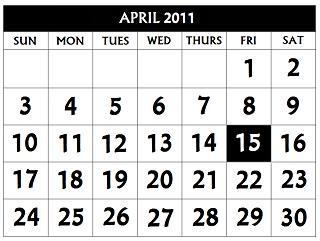
It was early morning on the west coast, mid-day in the east, and dinner time in the U.K. and Europe on Friday, April 15, 2011 when word spread the United States Department of Justice had unsealed an indictment and civil complaint targeting online poker's three biggest sites. Adding to the drama, the sites' domains were seized as well, with visitors greeted with DOJ and FBI seals and a sober, stern statement explaining why the sites were inaccessible. Before the day was over, poker players had already dubbed it "Black Friday."
Those calling it such had borrowed a term used to describe days marked by riots, massacres, financial crashes, and natural disasters. Looking back one year later, it might seem undue hyperbole to suggest comparisons between those events and a sudden, significant setback to what had been a wildly popular pastime and even career for many in the U.S. and around the world.
But during those first hours and days following what would amount to a wholesale shutdown of online poker in the U.S., most found "Black Friday" an appropriate enough descriptor. And even a year later, with many in the poker world still dealing in a direct way with consequences from the day's events, the term continues to seem fitting, evoking what was perhaps not a catastrophe but certainly an upheaval.
First Response: What About My Money?
 Two of the targeted sites -- PokerStars and Full Tilt Poker -- immediately shut their doors to U.S. players, with the similarly-targeted Cereus network of Absolute Poker and UltimateBet following suit some time after. At the time, those four sites together accounted for more than 90% of the U.S. online poker market.
As they came to grips with the sudden non-availability of games, U.S. players' primary concern that Friday afternoon and during the coming days was to wonder about the safety of their funds. At the time some were estimating American players to have had more than $500 million in accounts on the sites, with others suggesting a higher figure.
By Saturday PokerStars had already announced that all player funds were safe, including U.S. players', and that "for all customers outside the U.S., it is business as usual." The second-largest site, Full Tilt Poker, had likewise released a statement "to assure all players that their funds remain safe and secure," although an allusion to "the freezing of certain accounts" today reads as a kind of foreshadowing that all was not as well as the statement's upbeat tone suggests.
However, no similar word came from Absolute Poker/UB group, with many observers reading both sites' history of insider cheating scandals as suggesting players' funds on those two sites were most likely lost.
On the following Wednesday, April 20, the DOJ announced it had reached an agreement with both PokerStars and Full Tilt Poker to return their seized domains in order to allow the sites to facilitate the return of U.S. players funds. PokerStars immediately began doing just that, and by mid-May had reportedly already refunded more than $120 million to U.S. players.
Meanwhile, Full Tilt Poker began its series of infamous announcements from "FTPDoug" falsely repeating promises that funds were "safe and secure" and that more information about withdrawals was coming. It would take Absolute/UB until May 12 to broker a similar agreement with the DOJ to allow for the return of U.S. players' funds, although in their case the seized domains were not returned. However, as with Full Tilt Poker, no funds were returned to U.S.-based players on Absolute or UB.
Further Fallout
 Soon various Black Friday-related cancellations were announced. The FOX Sports network immediately announced it would no longer carry PokerStars' Big Game and Million Dollar Challenge shows. Full Tilt Poker announced its planned-for Onyx Cup series of high-dollar tournaments would not take place.
After showing reruns for several months, NBC cancelled the long-running Poker After Dark (an FTP-sponsored show) in September. And the popular High Stakes Poker, a show that had been variously sponsored by Stars and FTP, was cancelled by the Game Show Network late in 2011.
The World Series of Poker continued to air on ESPN during the summer and fall, however, with the WSOP itself enjoying healthy turnouts and once more besting its record for overall number of entrants. Many speculated that a number of U.S. players finding themselves without online poker had decided to play at the WSOP as a kind of final shot-taking.
Meanwhile, a number of full-time U.S.-based players moved out of the country in order to continue playing online, including Phil Galfond, Olivier Busquet, Shane Schleger, Justin Bonomo, Jon Aguiar, Dan Cates, Vanessa Selbst, Isaac Haxton, and others. The affiliate site Pocket Fives even created a relocation service called "Poker Refugees" to help players make such moves.
Answering the Charges, Further Allegations
 The original Black Friday indictment listed 11 individuals, charging them with a host of crimes including violating the Unlawful Internet Gambling Enforcement Act of 2006, operating illegal gambling businesses, bank fraud, money laundering, and more.
Over the last year six of those 11 have entered plea agreements, admitting guilt to certain charges in order to receive shorter sentences and fines. Among those not answering the charges against them include Isai Scheinberg (founder of PokerStars), Ray Bitar (Full Tilt Poker CEO), Nelson Burtwick (director of payments for Full Tilt), and Scott Tom (part-owner of Absolute Poker).
On September 20, the original civil complaint seeking a total of $3 billion from the targeted sites was amended further to add various allegations against Full Tilt Poker concerning the mismanagement of players' funds. The new amendment -- detailing at length "phantom money," "FTP Insider accounts," and false claims that funds were "safe and secure" -- also added the names of three Team Full Tilt members, Howard Lederer, Chris "Jesus" Ferguson, and Rafe Furst, as among those guilty of criminal activity.
In a press release accompanying the amendment, U.S. Attorney Preet Bharara suggested that "Full Tilt was not a legitimate poker company, but a global Ponzi scheme." The accuracy of the characterization was immediately questioned, but its effect was to generate still further bad publicity not just for FTP, but for poker, generally speaking.
By then, of course, Full Tilt Poker had shut down operations entirely, having seen its licenses to operate suspended and then revoked by the Alderney Gambling Control Commission. The site dealt its last hand on June 29, 2011.
All FTP player funds remain unavailable, with most estimates suggesting U.S. players are owed around $150 million. Including funds Full Tilt owes to players from the rest of the world, most suggest the total amount owed to be about $390 million. Absolute Poker and Ultimate Bet continue to serve a tiny trickle of players, apparently, although those sites, too, have failed to offer cashouts. Reports from last summer indicated Cereus sites owe approximately $54 million to their players.
Poker Goes "Back in the Shadows"
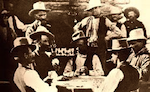 Last month a documentary, All In: The Poker Movie, premiered in which the events of Black Friday are prominently explored. Since most of the movie argues for the importance of poker to American history and culture, the government's action against the online poker sites last April is unsurprisingly presented as threatening -- not just to players' ability to play the game online, but to ideas of freedom and individual liberty, generally speaking.
Among the many people interviewed for the film is Brian Koppelman who helped write the screenplay for 1998's Rounders. Besides talking about the Rounders and its influence on a generation of poker players, Koppelman also shares a point he made in an earlier article he wrote for Grantland provocatively titled "The Beauty of Black Friday."
In the film and in the article, Koppelman reflects on how one other consequence of Black Friday was perhaps to send poker away from the mainstream where it had dwelled for most of its pre-internet, pre-Celebrity Poker Showdown, pre-"boom" history. For Koppelman, "the romance went out of the game" with the widespread popularity and even what might be regarded as cultural acceptance of poker.
"Until the online poker boom," Koppelman writes, "card players didn't look for anyone's permission, least of all the government." In other words, the "outlaw" status of cardslingers had all but gone away, replaced by a more "domesticated" version of the game.
Thus the "beauty" of Black Friday, Koppelman suggests, was to make poker once again seem as though it belonged on the cultural periphery and "back in the shadows, where, mythically at least, it belongs."
Black Friday: An End or a Beginning?
 That said, it certainly appears as we approach the one-year anniversary of Black Friday that legislators are poised to step in and endorse online poker once again in the form of state and/or federal regulation.
In the wake of last December's revised opinion by the DOJ regarding the Federal Wire Act's application to sports betting only, many states are making moves to begin offering various forms of online gambling, including online poker. And rumblings of a possible federal bill continue as well, although such seems doubtful to occur in 2012, an election year.
Not all are excited by such a prospect. Just last week, the commentator Robert Reich, former Secretary of Labor and current Professor of Public Policy at the University of California at Berkeley, wrote an article in which he expressed fears that "America is now opening the floodgates" to organized gambling online.
According to Reich, the revised DOJ opinion will directly lead to "a boom in online gambling," and soon. "Expect high-stakes poker to be available on every work desk and mobile phone," he predicts.
However, Reich worries that the increased availability of online gambling will unduly hurt those with lower incomes and perhaps even pave the way to various types of fraud. "America's capital market was already a giant casino," writes Reich. "Why now turn the rest of America into one?"
It remains to be seen whether or not the U.S. does indeed again become a central focus for online poker -- this time legal and regulated -- and then whether or not Reich's fears regarding its impact on society will be realized.
In any case, it could well happen that when we mark the next anniversary of Black Friday -- or look back at it five or ten years hence -- we'll be viewing that day much, much differently. That is to say, rather than signal the end of online poker as we knew it, April 15, 2011 may well mark the starting point of an entirely new era of online poker in the U.S. and around the world.
Prices quoted in copy are correct at time of publication but liable to change.