US Election: Does a Supreme Court fight help or hinder Trump?
"Trumpism has energised liberals like never before. I’m not actually convinced this will motivate them any more than they were already so perhaps it does help Trump bring back some conservative critics."
The death of Ruth Bader Ginsberg and battle to replace her will significantly impact the election campaign. Paul Krishnamurty analyses whom it will benefit...
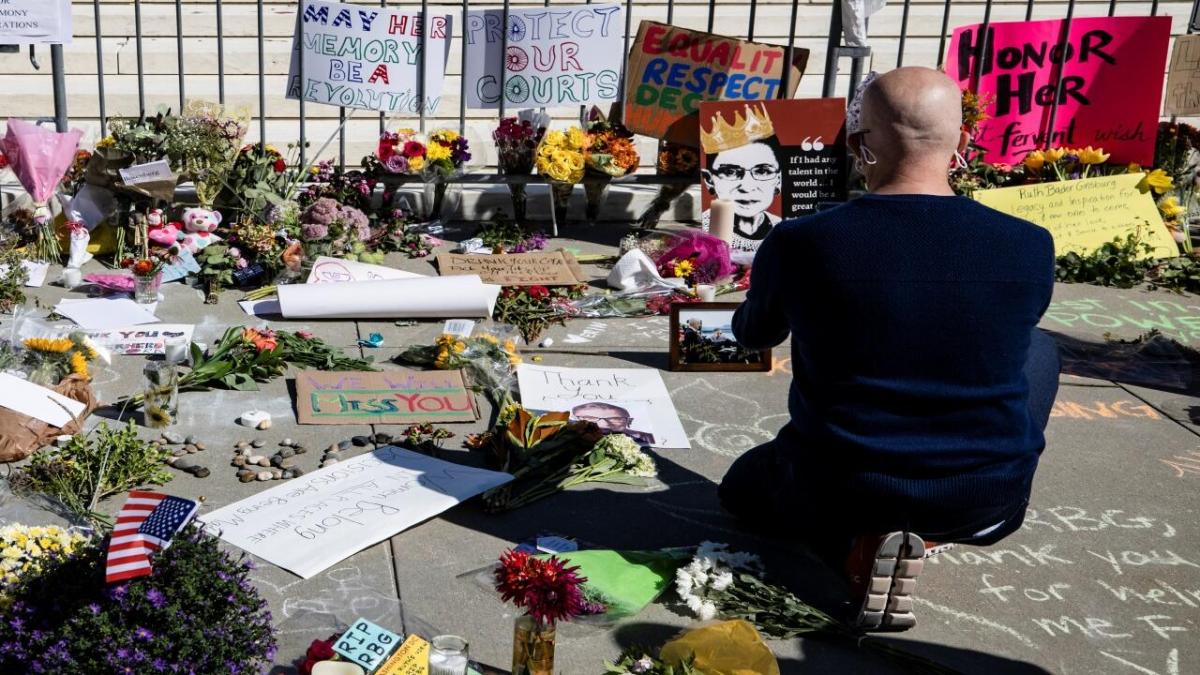
For all the speculation, regarding what will dominate the election news cycle, alter the campaign or even change the result, it was something very few even considered. For a very short moment on Friday night, US politics came to a standstill, as allies and opponents joined in paying tribute following the death of Supreme Court judge Ruth Bader Ginsburg - one of the most significant Liberals of the last century.
Court now at centre of election campaigns
It was a very short moment, as all concerned understand the ramifications. The battle to appoint her replacement is now central to the election and the country's future. The current balance is 5-3 in favour of Conservatives. A Trump appointment would fix their majority for decades and spell disaster for progressive reforms of the 20th century, such as abortion.
Whilst we can never know what drives a market move, there's a strong suggestion that RGB's passing inspired a meaningful gamble for Trump. That night Biden's odds were down to 1.82, after solid support for a couple of days. The news sent the move into reverse. That was my immediate gut reaction. That putting the Supreme Court on the ballot would energise Trump's Christian base, win back some GOP defectors and change the election narrative. On reflection, the effect is far from clear.
Scalia replacement fight had big impact in 2016
To be frank, I prefer to listen to US-based professionals on this subject. Until touring the country in 2016, I did not realise how critical Supreme Court nominations are to the political conversation. To a Brit, that was alien and it blindsided me.
I did not foresee Trump uniting a Republican Party after a bitter primary. Yet the replacement for Justice Scalia became an important and useful campaigning tool. That issue, along with the resurgence of the e-mail scandal, may well have cost Clinton enough votes to turn victory in defeat.
Remember 2018, too. The bitter fight over Brett Kavanaugh's confirmation, following testimony from a woman who accused him of sexually assaulting her 35 years previously, effectively stirred up the GOP base ahead of the mid-terms, helping them win the Senate.
2018 Kavanaugh fight had mixed implications
Here's the problem - the Republicans lost the mid-terms. Yes, they did well in the Senate but only a third of the seats were in-play and that map was skewed towards deep red, conservative-minded states. But in the states that will determine the presidency - Michigan, Wisconsin, Pennsylvania, Arizona - results were catastrophic for Republicans.
The idea that a culture wars campaign hurts Trump in these places is backed up by this thread from Dave Wasserman from Cook Political Report. He makes a fascinating observation about the relatively social liberal views of the pivotal strand of 'Obama/Trump' voters.
I've heard some analysts argue a SCOTUS fight will help Trump by shifting "what 2020 will be about" from his mismanagement of COVID to a more straightforward partisan cage match.
-- Dave Wasserman (@Redistrict) September 19, 2020
That could happen, but I've always seen some big risks for Trump in a pre-election SCOTUS fight...
For decades, many of these blue-collar, pro-choice Trump voters had voted for Democrats because they saw Republicans as the party of "Bible thumpers" who moralized against abortion & gay marriage.
-- Dave Wasserman (@Redistrict) September 19, 2020
Then Trump came along, and they didn't mind him as much.
The first round of polls on the substance do not read well for Trump either. The following may be an outlier but it's clear from other numbers that by pushing ahead with a nominee before the election, he is taking on a clear majority of public opinion. So too if defeated Republicans push it through during the transition period, before the new President and Senate are in place.
Reuters/Ipsos: 62% of adults (including half of Republicans) believe the SCOTUS vacancy should be filled by the winner of the 2020 election. 23% disagree. https://t.co/ZhJaBRTQEb
-- Nathaniel Rakich (@baseballot) September 20, 2020
This makes me think that, whilst he will inevitably push ahead, this probably isn't a fight Trump relishes. There's a good chance he won't have the numbers to confirm his nominee before the election, yet it brings unhelpful subjects such as abortion to the election fore. Meanwhile his personal brand looks ever more dictatorial
Republicans look extremely hypocritical
Nor does this help certain allies trying to save their seats in the Senate. It reminds voters of their hypocrisy. In 2016, they blocked Obama's replacement Merrick Garland, arguing that it was wrong to do so during an election year. Lindsay Graham - performer of the most rapid and remarkable u-turns in history when switching from Trump-hater to sycophant - is neck-and-neck with Jamie Harrison in South Carolina. The Democrat is raising fortunes in hope of what would be an extraordinary upset. He'll certainly be utilising this footage.
RETWEET: We will absolutely use your words against you, @LindseyGrahamSC. pic.twitter.com/km5dc0vLje
-- Stephen Groves (@stephengrovesjr) September 19, 2020
More widely, astonishing sums have been donated to Democrat campaigns since Friday - well in excess of $100M. Anti-Trumpers are super-motivated, as they have been for special elections and the mid-terms.
Indeed the tactical takeaway from the mid-terms was that Trumpism, especially doubled down, is electoral suicide. He and Fox News spent the campaign fearmongering about the 'caravan' of illegal immigrants heading towards the Southern border. He called a national emergency.
Voters on both sides were energised amid the culture war. At 50%, turnout was massively up from 36% and not far off general election levels. Democrats ran on healthcare and won the House, with their best result since the 70s.
Trumpism has energised liberals like never before. I'm not actually convinced this will motivate them any more than they were already so perhaps it does help Trump bring back some conservative critics.
It certainly helps him in changing the conversation from coronavirus and the multitude of scandals. It will remind conservatives why they hate liberals. We will soon see whether the small number of persuadables share that perspective and if that is enough to meaningfully change the race.
Follow Paul on Twitter and check out his website, Political Gambler.
GET £50 IN FREE BETS MULTIPLES WHEN YOU SPEND £10 ON THE BETFAIR SPORTSBOOK
New customers only. Bet £10 on the Betfair Sportsbook at odds of min EVS (2.0) and receive £50 in FREE Bet Builders, Accumulators or Multiples to use on any sport. T&Cs apply.
Prices quoted in copy are correct at time of publication but liable to change.